
Neighbor Stewardship Agreements
Approved Activities
Neighbor Stewardship Agreements
- Remove Downed Woody Debris (Within 100 feet of Structure)
- Remove Pine Needle/Leaf Litter (Within 30 feet of Structure)
- Prune Branches of Live Conifer Trees (Within 100 feet of Structure)
- Remove Shrubs (Within 100 feet of Structure)
- Remove Conifer Seedlings & Saplings less than 6 feet tall, if they are within 20 feet of the nearest leave tree.
1. Remove Downed Woody Debris (Within 100 feet of Structure)
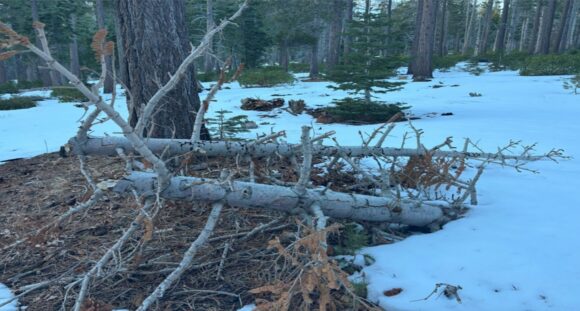
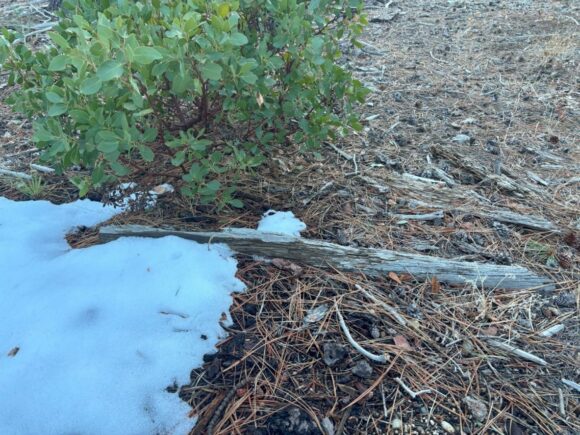
Remove only solid dead and down trees, branches, and pinecones lying on forest floor (no standing trees). Do not remove wood that has settled into three inches of soil/duff layer or has no bark left intact, or a log that has decayed to a point of crumbling when picked up.
Examples of downed woody debris OK for you to pick up from Conservancy lot in these two following photos:

Do not pick up an example such as these following two photos because three inches or more has settled into the soil/duff layer, or no bark is left intact, and log has decayed to a point of crumbling when picked up. Examples:

2. Remove Pine Needle/Leaf Litter (Within 30 feet of Structure)
Remove pine needles and leaf litter within 0-30 feet from your structure once every spring and as needed.
- 0–5 feet from a structure:remove all pine needles and leaf litter down to bare soil.
- 5–30 feet from a structure: remove pine needles and leaf litter leaving at least two inches of duff on top of soil to protect soil and prevent erosion.
- Within ten feet of propane tanks: remove all pine needles and leaf litter down to bare soil. (Graphic Credit: Living with Fire Defensible Space Guide)


Soil and leaf litter profile

Raking pine needles (Photo credit: Tahoe Daily Tribune)
For Activities 3-5, see limitations on page 2 of Stewardship Agreement.
3. Prune Branches of Live Conifer Trees (Within 100 feet of Structure)
Recommended Tools for Pruning Branches:

Hand Saw
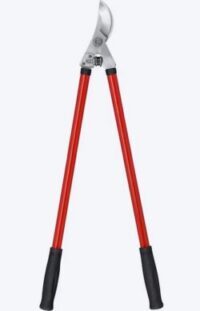
Loppers
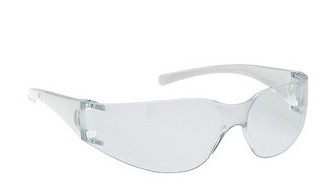
Eye Protection
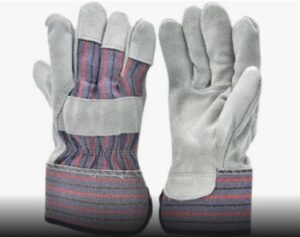
Hand Protection
Large Tree Pruning (trees more than 18 feet in height)
- Prune live and dead lower branches up to six feet from ground level.
- Remove branches to create a clearance of ten feet from a structure, deck, roof or chimney outlet.
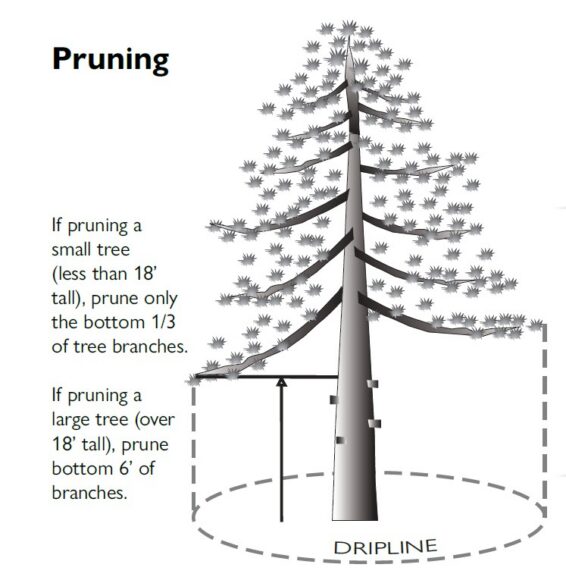
Graphic Credit: USFS Homeowner Agreement & Guidelines for Defensible Space / Fuels Reduction
Small Tree Pruning (trees less than 18 feet in height)
- Do not remove more than one-third of the tree’s lower branches, as it will harm tree health. For example, you may remove up to five feet of lower limbs on a 15-foot tree.
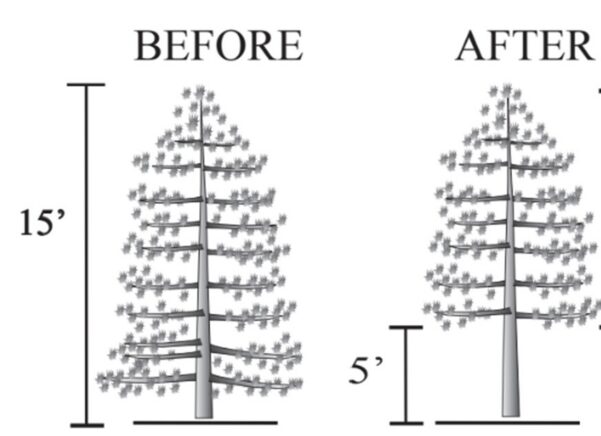
Graphic Credit: Adapted from USFS Homeowner Agreement & Guidelines for Defensible Space / Fuels Reduction
Step-by-step photos of pruning lower branches on a Lodgepole pine that is greater than 18 feet in height:
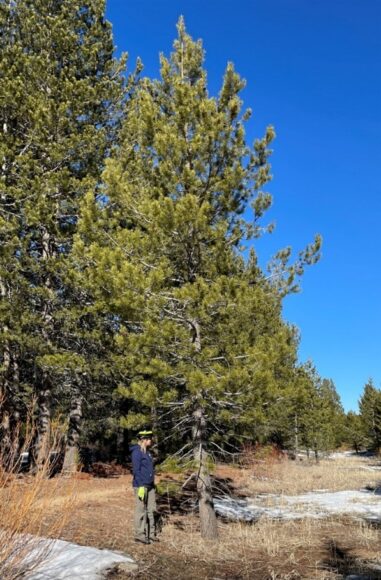
25′ tall Lodgepole pine, lower 6′ of branches need to be pruned

Pruning low branches flush to tree bole (trunk) with loppers
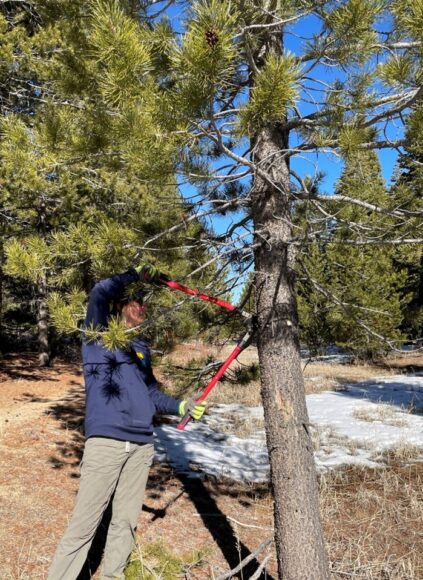
Pruning low branches
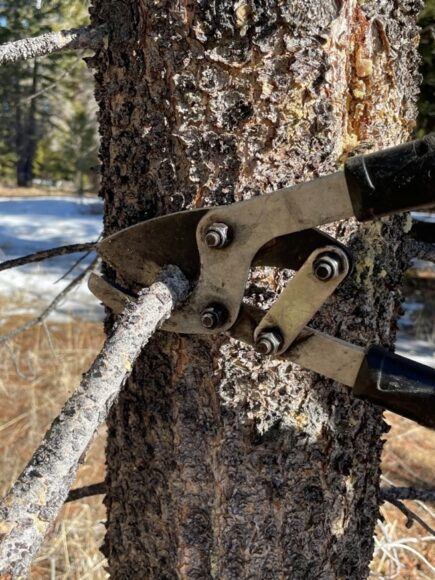
Close up of pruning, cutting flush to bole (trunk) of tree with loppers.

Close up of pruning, cutting flush to bole (trunk) of tree with hand saw.

Lower tree limbs have been pruned up to six feet. Removing and disposing of cut limbs is also part of the process.
Pruning guidelines apply to conifer species only. Do not prune riparian species such as willow, alder, or aspen:
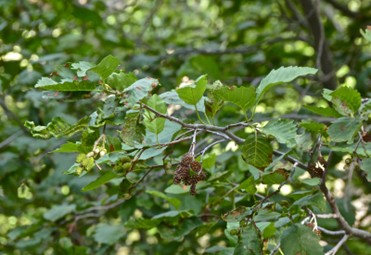
Alder, riparian species, do not prune. (Photo Credit: Calscape.org Copyright © 2015 Jean Pawek)
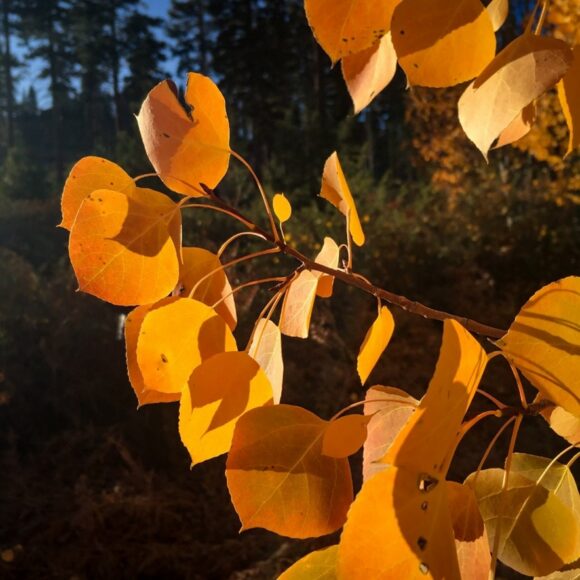
Aspen, riparian species, do not prune.
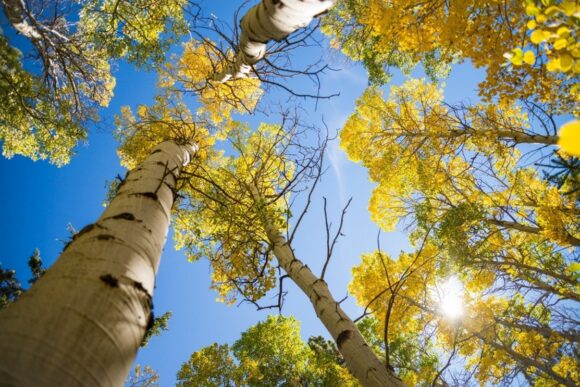
Aspen, riparian species, do not prune.
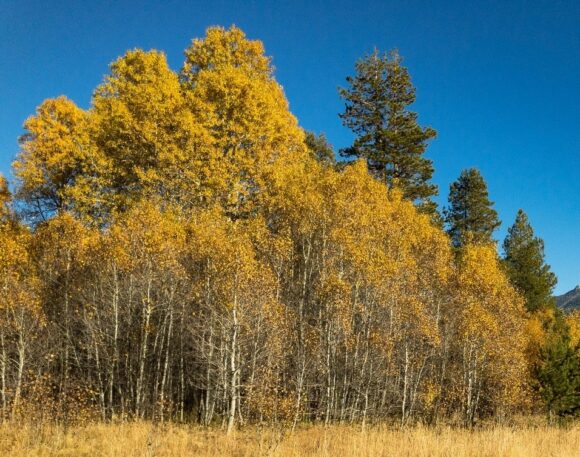
Aspen, riparian species, do not prune.

Willow, riparian species, do not prune. (Photo Credit: Calscape.org)

Willow, riparian species, do not prune.
4. Remove Shrubs (Within 100 feet of Structure)
Removal means cutting the shrub’s main stem within four inches and parallel to ground; do not dig or remove stump or root system. (see sub-bullets below and website for shrub species specific recommendations)
0-5 feet from structure:
- Remove all shrubs.

Remove all shrubs within five feet of structure (Photo Credit: photo by Merrit Thomas on unsplash, from the Living With Fire Defensible Space Guide)
5-100 feet from structure:
- Within Dripline of Trees: Area located directly under the outer circumference of the tree branches. Remove all shrubs in the dripline except Mahala Mat.
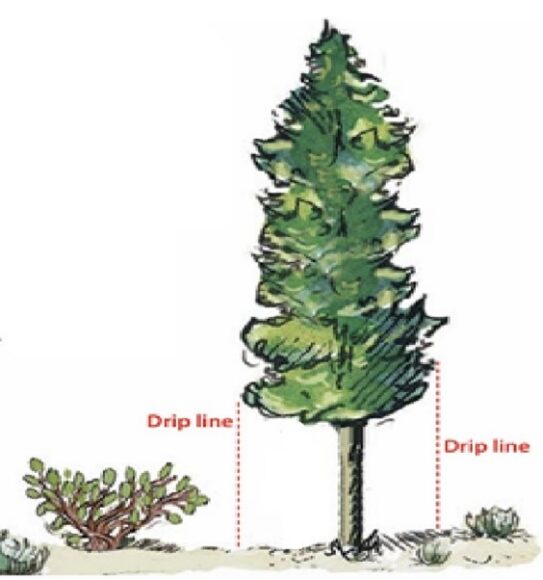
What is a Dripline? Source: Living With Fire: A Guide for the Homeowner, Lake Tahoe Basin
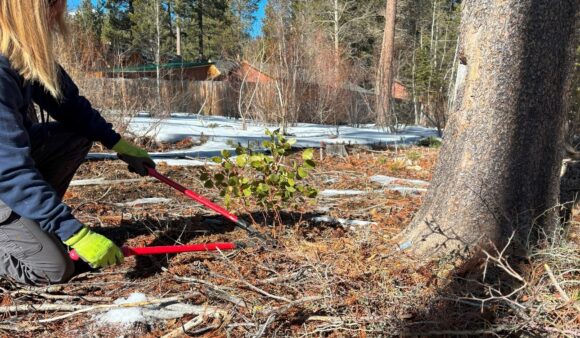 |
|
Cutting shrub in dripline of tree with loppers.

Shrub removal with hand tools

Prune shrub within four inches and parallel to ground. Do not dig or remove stumps or root systems.
- Contiguous Shrub Fields: Create a separation of twice the height between individual shrubs or small clumps of shrubs. For example, if a sage brush is two feet tall, multiply that by two and ensure there is a four-foot separation between shrubs. Retain at least half of shrubs on site in a mosaic pattern.
- Reference Backyard Native Plants for plant identification.
Photos of Contiguous Shrub Field (that needs to be thinned):


Photos showing a mosaic pattern (retaining at least 50 percent of the shrubs)

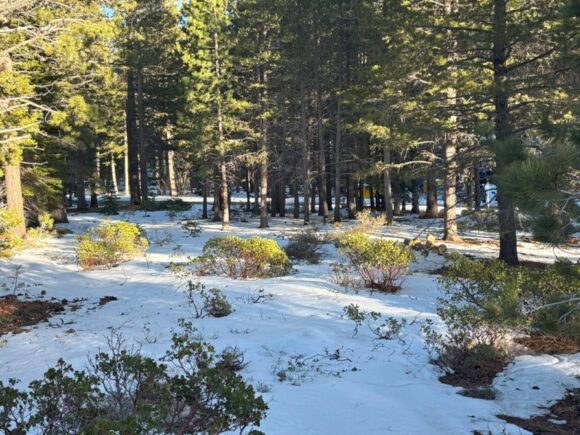
Example of before and after shrub removal:

Before shrub removal
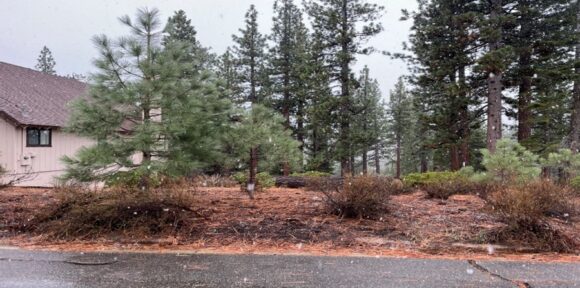
After shrub removal (leaving at least 50 percent in a mosaic pattern outside of the dripline of trees)
Remove flammable woody shrubs including but not limited to:
- Whitethorn,
- Tobacco Brush or Snowbrush,
- Bitterbrush,
- Sierra Chinquapin,
- Manzanita,
- Huckleberry Oak,
- Sagebrush,
- Rabbitbrush.
Do not Remove: low-fire-risk shrubs including:
- Snowberry,
- Thimbleberry,
- Blue Elderberry,
- Sierra Gooseberry,
- Sierra Currant or Mountain Pink,
- Wax Currant
- Western Serviceberry,
- Mahala Mat,
- Willow,
- Alder.
Source for above vegetation identification photos: Backyard Native Plants
5. Remove conifer seedlings and saplings less than six feet tall, if they are within 20 feet of the nearest leave tree.

Larger tree, seedling, and sapling
Before and After examples of removing conifer seedlings & saplings:

Before conifer seedling & sapling removal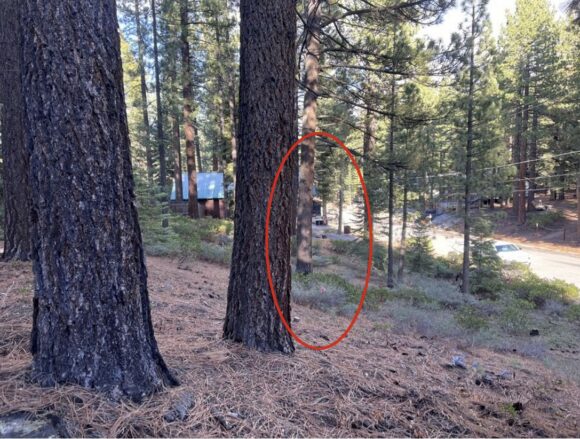
After conifer seedling & sapling removal
Sources: