
July 2026 Conservancy Newsletter
We hope this newsletter finds you enjoying summer and the great outdoors. Our thanks to everyone who recreated responsibly on July Fourth at the Lake Tahoe beaches we manage. Thanks also to our staff and crews who worked the busy Independence Day weekend to help keep the lakefront and visitors safe.
This month’s newsletter includes a funding announcement for the California Tahoe Conservancy’s Tahoe for All grant program, new Conservancy grants awarded to help Lake Tahoe Basin (Basin) partners advance wildfire resilience, and opportunities for community members to collect free firewood from Conservancy lands. Also, Conservancy Executive Director Jason Vasques looks forward to joining California Natural Resources Agency Secretary Wade Crowfoot on July 22 as part of the Secretary Speaker Series – see details below.
-California Tahoe Conservancy
Conservancy Announces $300,000 Available for Tahoe for All Grants
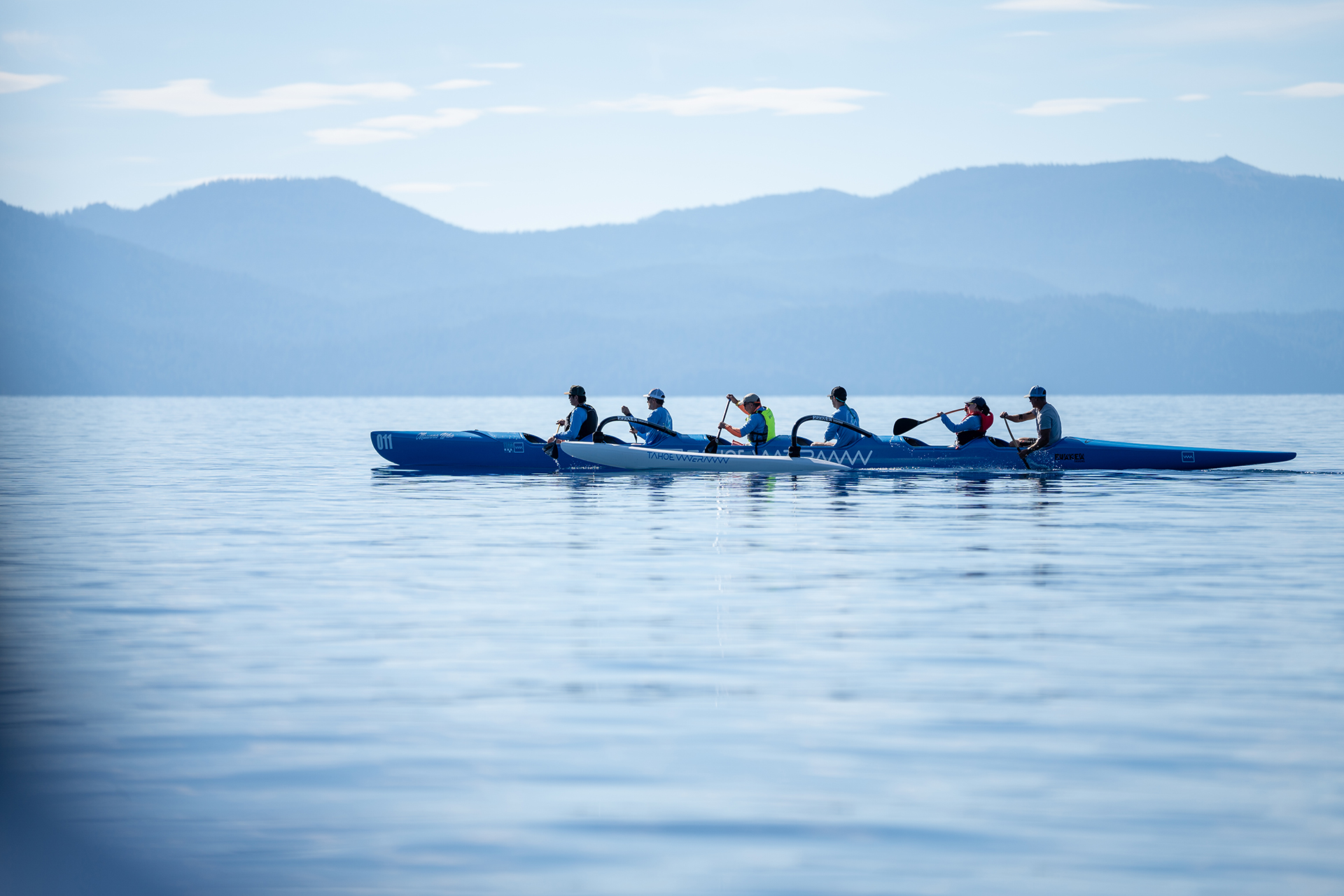
The Conservancy announces the availability of up to $300,000 in grant funding through its Tahoe for All grant program. Tahoe for All grants support programs and projects that provide positive and inclusive outdoor experiences for communities facing barriers to accessing outdoor recreation infrastructure and opportunities in the Basin.
Organizations wishing to apply must first submit a pre-application by July 31, 2026 August 5, 2026, which the Conservancy will review for eligibility and alignment with program goals. The Conservancy will invite organizations with successful pre-applications to submit full applications. Full applications are due by September 4, 2026. Conservancy staff expects to bring recommended awards for Board consideration in December 2026.
Visit the Tahoe for All web page to learn more about eligible grantees and projects, and to find additional details on how to apply.
Conservancy Awards Grant to UC Davis to Study Wildfire Areas, Help Land Managers Improve Adaptive Management of Tahoe Forests
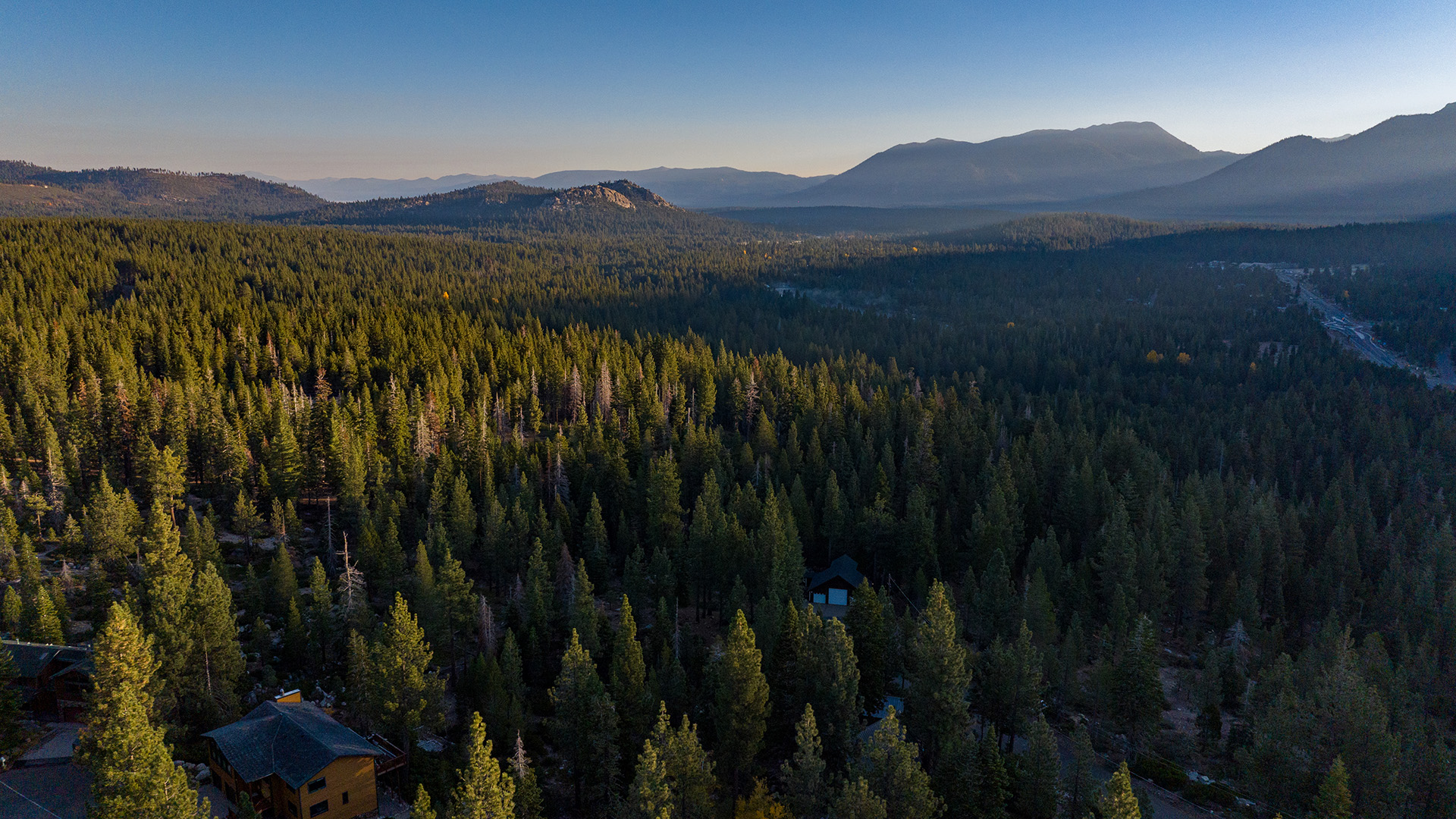
The Conservancy has awarded a $461,120 grant to the Safford Lab at UC Davis to study the long-term effects of fuel reduction and wildfire on forest health and resilience in the Lake Tahoe Basin. The project expands long-term forest monitoring across major Lake Tahoe Basin wildfire areas to evaluate how different fuel-reduction treatments and the severity of these wildfires influence forest health, resilience, and recovery in both burned and unburned areas of forest. Field crews will measure changes in plant diversity, ground cover, fuels, carbon, and forest structure in areas within and adjacent to the footprints of the Angora, Caldor, and Showers Fires.
This project helps fill a gap in our understanding of the effectiveness of forest treatment types in the Basin. Although land managers have treated nearly 100,000 acres of Basin forests since the beginning of the Environmental Improvement Program (EIP) program, and thousands of acres of treated forest have burned in wildfires, there has been no comprehensive scientific attempt to assess treatment effectiveness or ecological effects, in either burned or unburned forest, or to gauge whether forest management—or the lack of it—is improving forest resilience or health. The researchers aim to identify which treatments most effectively reduce wildfire risk, how well Basin forests meet desired resilience conditions, and how much time can pass after wildfires before new fuel treatments are needed. Results from the study will support adaptive management, climate-resilient forest planning, and EIP projects in Basin communities and watersheds.
The Conservancy awarded this grant using Climate Bond (Proposition 4) funds.
Conservancy Awards Grant for Technology to Help Assess Fire Resilience of Private Lands
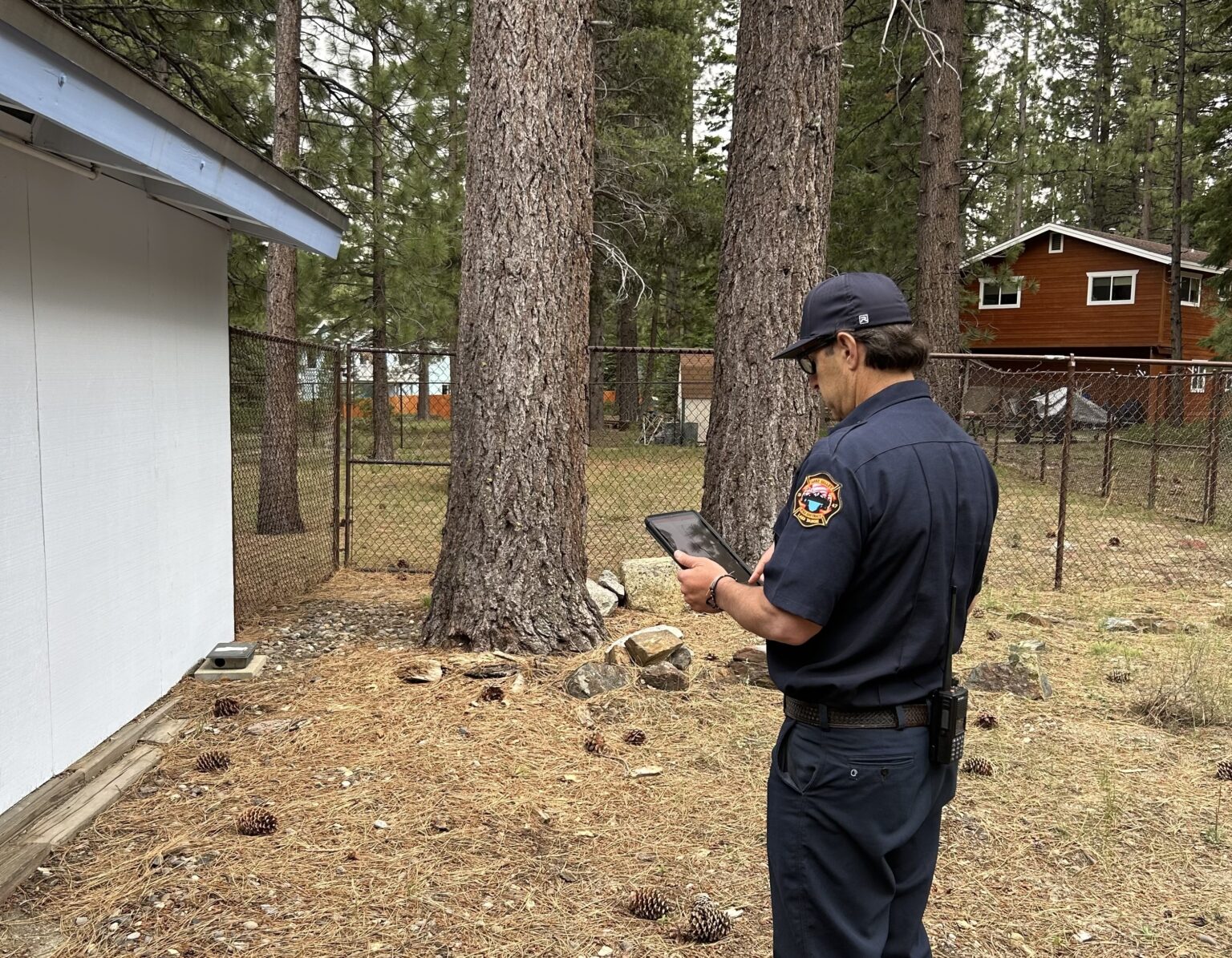
The Conservancy has awarded a $77,600 grant to Tahoe Resource Conservation District (Tahoe RCD) for technology that enables fire protection districts to assess the fire resilience of private properties in the Basin.
Private parcels represent a critical but historically under-quantified component of wildfire risk in the Basin landscape, which is dominated by public lands. For some time, Tahoe fire protection districts have been using a wildfire resilience software platform named FireAside to evaluate defensible space, home hardening, and private-parcel wildfire risk within their districts. To enable more comprehensive evaluation, Basin fire districts will transition from separate accounts to a single, coordinated framework, with Tahoe RCD acting as the Basinwide coordinator for the Tahoe Fire and Fuels Team. Partners expect this transition to increase the efficiency of defensible space evaluations, standardize digital wildfire risk data on structures Basinwide, improve identification of high-risk parcels, and improve the ability of fire districts to provide actionable guidance for homeowners.
The Conservancy awarded this grant using Climate Bond (Proposition 4) funds.
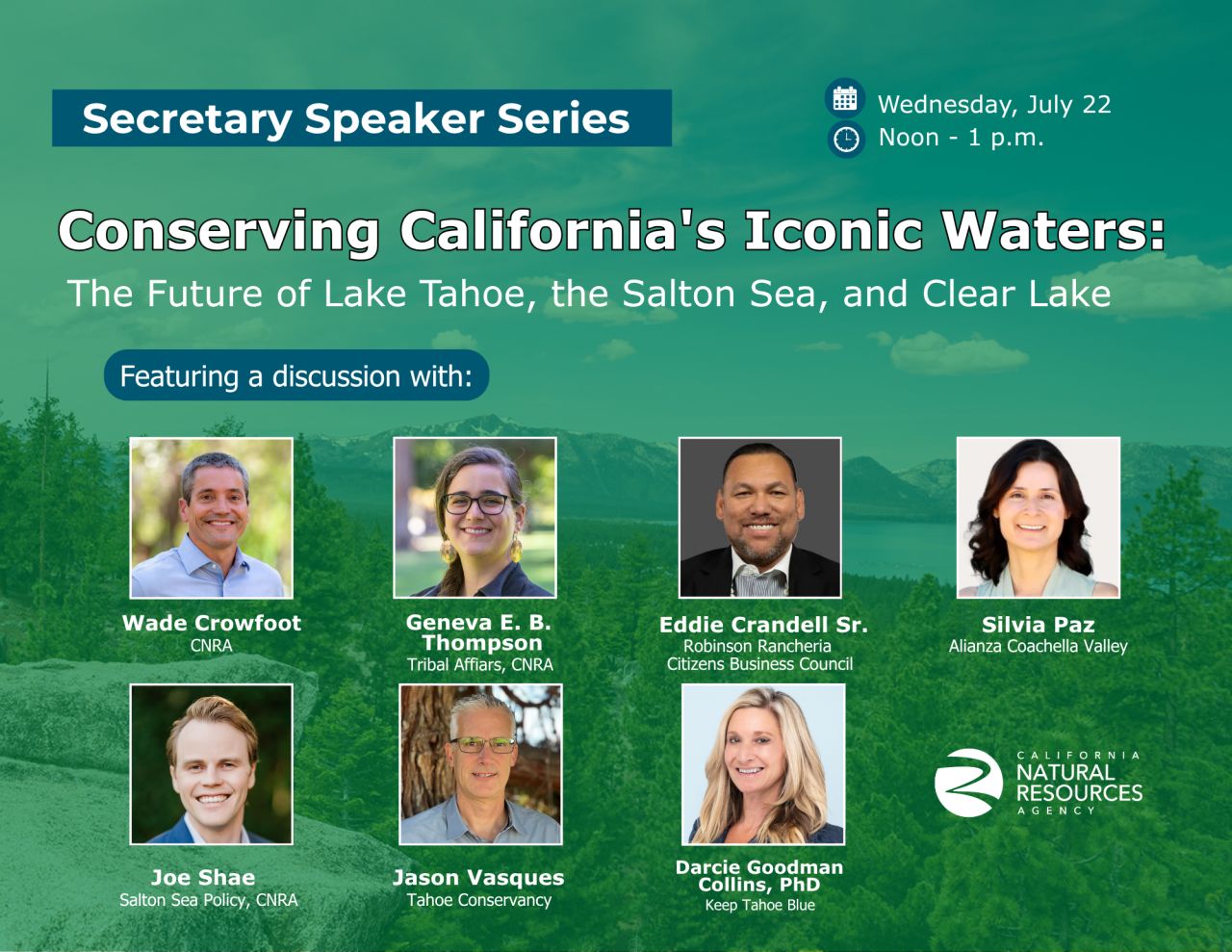
California Natural Resources Agency discusses Conserving California’s Iconic Waters: The Future of Lake Tahoe, the Salton Sea, and Clear Lake
Conservancy Continues to offer Free Firewood Collection Permits

The Conservancy is once again offering free permits for community members to gather firewood from select Conservancy properties. The Conservancy thins forests on its properties to reduce wildfire risk and improve forest health. Some forestry projects generate usable firewood, which crews or contractors cut to firewood length for public collection by permit holders.
Find a map showing available wood, including how recently the wood became available, at tahoe.ca.gov/fuelwood-permit. For example, Tahoma-area Conservancy properties have the most recently available fuelwood at the time of this newsletter.
Each firewood collection permit is valid for up to two cords of wood, with a limit of one permit per household. Permits expire at the end of the year. Get your free permit from the Conservancy website.
Washoe Tribe-led Máyala Wáta Project Resumes Work
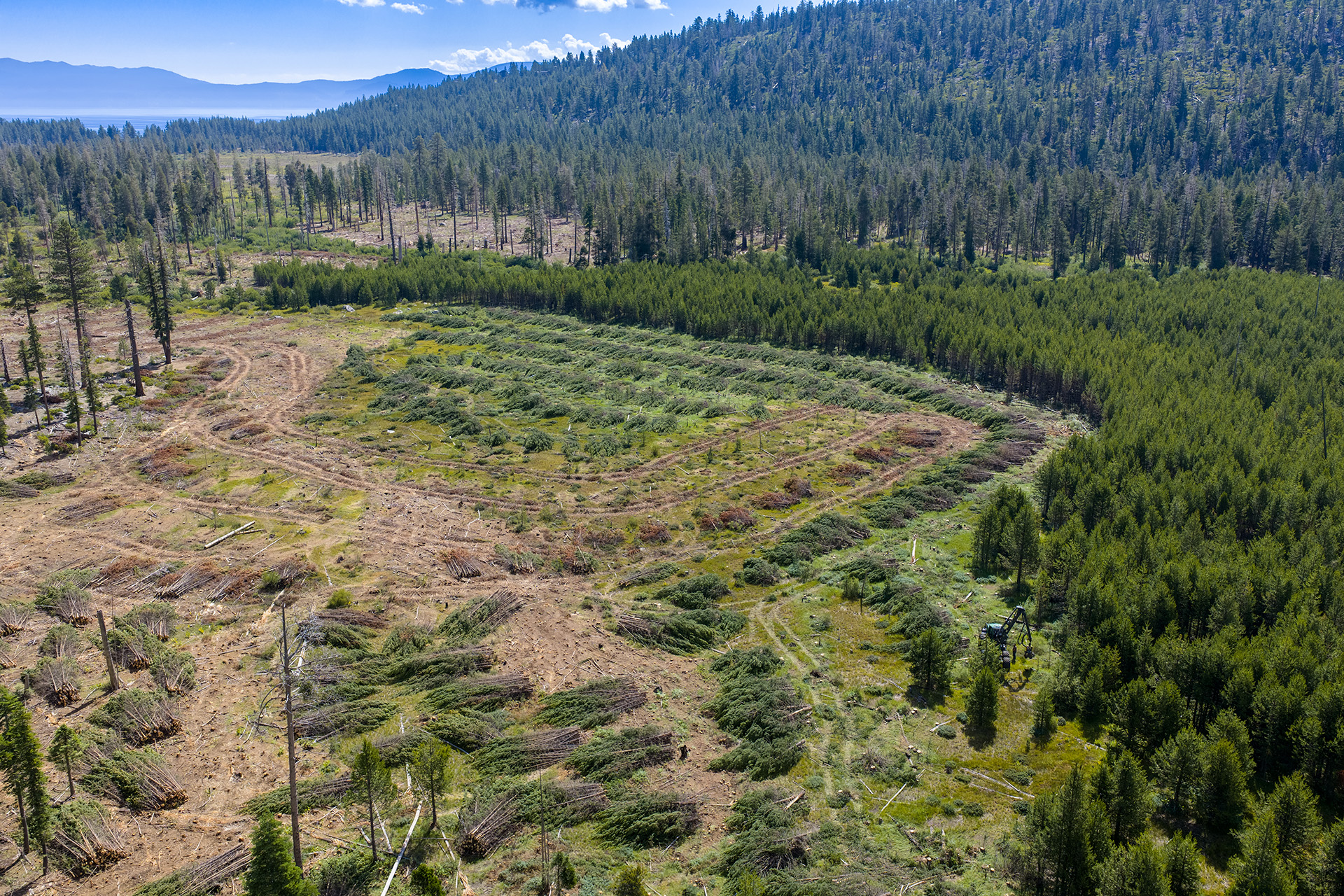
The Washoe Tribe of Nevada and California has resumed work on the Tribe’s Máyala Wáta (Meeks Meadow) Restoration Project. Last year, the Tribe began removing encroaching conifers from over 200 acres of the meadow and thinning 70 acres of the surrounding upland forest.
This project is the first of its kind, where a Tribe can conduct restoration activity on U.S. Forest Service land through an agreement between the Washoe Tribe and the U.S. Forest Service – Lake Tahoe Basin Management Unit. The Conservancy has supported the project via $1.4 million in grant funding.
Upcoming California Tahoe Conservancy Board Meetings
The Board will meet on September 17, 2026. The agenda will be available on the Conservancy website ten days prior to the meeting.
Lake Tahoe in the News
Thousands of native Lahontan cutthroat trout released into Lake Tahoe in historic partnership – Sierra Sun, July 1, 2026
Regan Beach repairs will start in September – Tahoe Daily Tribune, July 11, 2026
State of the Lake 2026: Fifty Years of Discoveries and Looking Toward the Future – Tahoe Environmental Research Center, July 16, 2026
Show Your Love for Tahoe While Protecting It
When you order a California Lake Tahoe license plate, you help build biking and hiking trails, restore fish and wildlife habitat, and protect Lake Tahoe’s famous beaches and blue waters. 96 percent of all funds from Tahoe plate sales come back to Lake Tahoe.
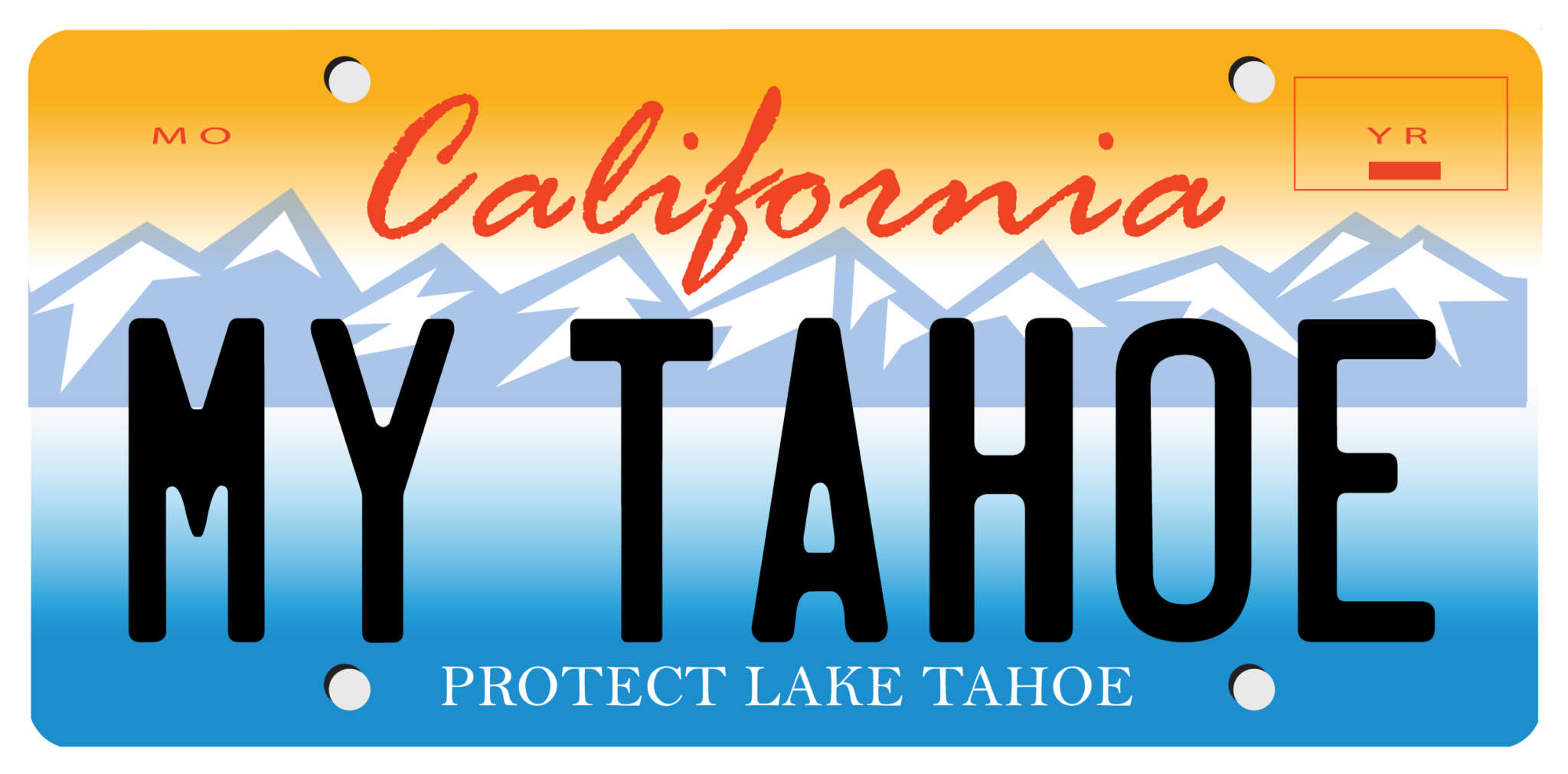
Show Your Love for Tahoe While Protecting It
When you order a California Lake Tahoe license plate, you help build biking and hiking trails, restore fish and wildlife habitat, and protect Lake Tahoe’s famous beaches and blue waters. 96 percent of all funds from Tahoe plate sales come back to Lake Tahoe.